WHAT IS A TRUST?
Inspired by the Anglo-Saxon trust, the fiducie is an innovative and effective asset management and financing tool.
It is established by entering into a fiducie agreement (trust agreement), governed by Articles 2011 to 2030, 2372-1 to 2372-5,
and 2488-1 to 2488-5 of the French Civil Code.
Any individual or legal entity (the “settlor”) may transfer assets belonging to them, whether existing or future, to a trustee,
who is responsible forcarrying out the purpose set out in the agreement, for the benefit of the settlor itself or of other
beneficiaries designated by the settlor.
Such transfer may serve two distinct purposes: asset management (management fiducie), or the allocation of assets as
security for the benefit of creditors in connection with financing (security fiducie), in which case the creditors become the
beneficiaries of the arrangement.
In both cases, the transferred assets are held in a separate estate, distinct from both the settlor’s estate and the trustee’s
own estate.
This segregation is at the heart of the effectiveness of the fiducie as a legal instrument.
The fiducie agreement, which may have a maximum term of 99 years, must be registered in order to be valid.
As a general principle, the fiducie is tax-neutral, with the transfer being carried out at net book value.
WHAT IS A TRUST?
Inspired by the Anglo-Saxon trust, the fiducie is an innovative and effective asset management and financing tool.
It is established by entering into a fiducie agreement (trust agreement), governed by Articles 2011 to 2030, 2372-1 to 2372-5,
and 2488-1 to 2488-5 of the French Civil Code.
Any individual or legal entity (the “settlor”) may transfer assets belonging to them, whether existing or future, to a trustee,
who is responsible forcarrying out the purpose set out in the agreement, for the benefit of the settlor itself or of other
beneficiaries designated by the settlor.
Such transfer may serve two distinct purposes: asset management (management fiducie), or the allocation of assets as
security for the benefit of creditors in connection with financing (security fiducie), in which case the creditors become the
beneficiaries of the arrangement.
In both cases, the transferred assets are held in a separate estate, distinct from both the settlor’s estate and the trustee’s
own estate.
This segregation is at the heart of the effectiveness of the fiducie as a legal instrument.
The fiducie agreement, which may have a maximum term of 99 years, must be registered in order to be valid.
As a general principle, the fiducie is tax-neutral, with the transfer being carried out at net book value.

SECURITY TRUST

MANAGEMENT TRUST
MANAGEMENT TRUST
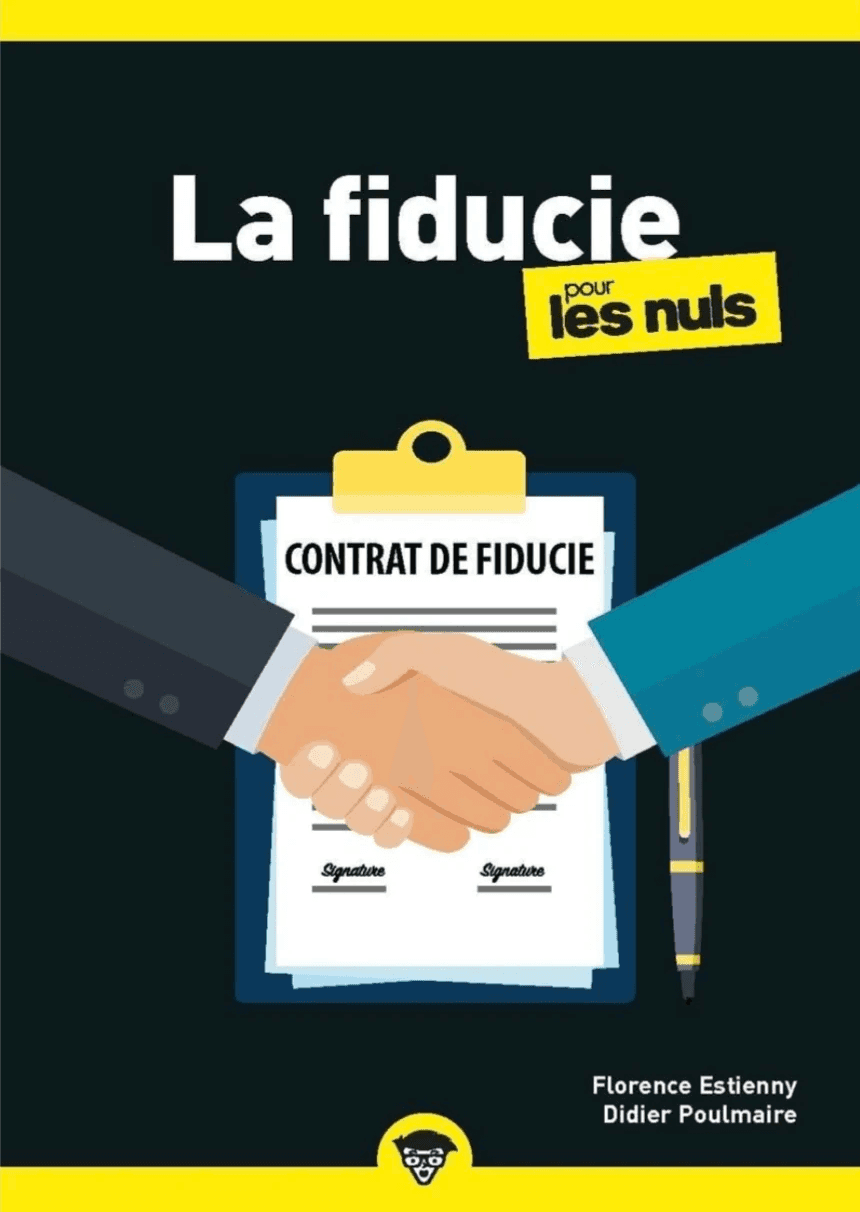
"Fiduciary for
Dummies"
Florence Estienny & Didier Poulmaire
More than a legal instrument introduced into French law in 2007,
the trust has the power to bring about a true revolution across
many sectors of economic life and in the everyday lives of individuals.
This book will explain everything you need to know about its mechanisms,
its key players and the best ways to manage your assets.
"Fiduciary for
Dummies"
Florence Estienny & Didier Poulmaire
More than a legal instrument introduced into French
law in 2007, the trust has the power to bring about a
true revolution across many sectors of economic life
and in the everyday lives of individuals.
This book will explain everything you need to know about its
mechanisms, its key players and the best ways to manage
your assets.
41 avenue Foch 75016 Paris



© Poulmaire Gestion Fiducie - All rights reserved
41 avenue Foch 75016 Paris
© Poulmaire Gestion Fiducie - All rights reserved